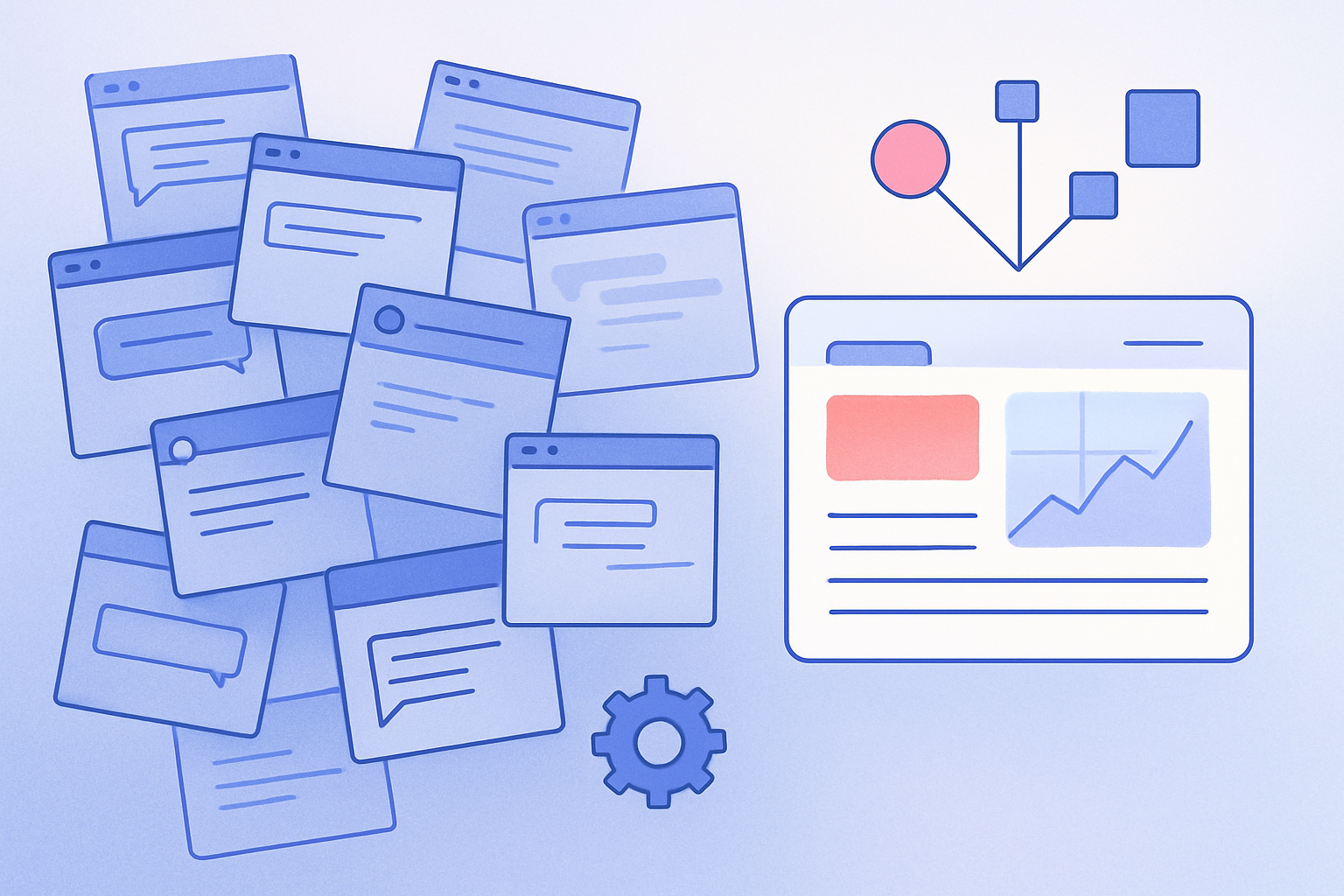
Stop Manually Checking ChatGPT: There’s a Better Way
Last Tuesday at 9 AM, a marketing director at a mid-sized fintech company did what she does every morning: opened ChatGPT, Perplexity, and Claude in three separate tabs. She typed the same five questions into each one, scanning for her company’s name. Forty-five minutes later, she’d filled a few cells in a spreadsheet and moved on with her day.
She’s been doing this for six months.
If this ritual sounds familiar, you’re not alone. Thousands of marketers have adopted some version of this manual AI monitoring routine, trying to keep tabs on how their brands appear in AI-generated responses. It’s understandable—visibility in AI answers matters more every month. But this approach has a fundamental problem: it doesn’t actually work.
The Illusion of Insight
Manual checking feels productive. You’re gathering data, right? You’re staying informed.
But what you’re actually getting is a snapshot of a single moment, from a single account, asking questions phrased exactly how you thought to phrase them. AI responses shift based on context, conversation history, even time of day. The answer ChatGPT gives you at 9 AM might differ from what your potential customer sees at 3 PM.
Think of it like checking your Google ranking by typing one keyword into your own browser once a day. You’d never call that an SEO strategy. Yet somehow, we’ve accepted this as a reasonable approach to AI monitoring.
There’s also the selection bias problem. You’re asking questions you expect your brand to answer well. Your customers ask differently. They use terminology you haven’t considered. They compare you to competitors you didn’t know existed. A manual spot-check will never capture that breadth.
The Scale Problem Nobody Talks About
Let’s do some quick math.
Say you want to monitor 20 relevant questions across five major AI platforms. That’s 100 queries. If each takes 30 seconds to type, read, and log, you’re looking at nearly an hour of work—assuming you don’t get distracted or find something worth investigating further.
Now multiply that by the days in a month. Then consider that 20 questions probably isn’t enough to understand your true visibility. Real coverage might require 50 questions, or 100. And what about tracking competitors? Or monitoring how responses change over time?
The math breaks quickly. Manual monitoring doesn’t scale, which means most teams either abandon it entirely or settle for dangerously incomplete data.
One B2B software company learned this the hard way. Their marketing team manually checked three questions daily for their primary product category. They felt confident about their AI visibility. Then they ran a comprehensive audit and discovered that their brand appeared in only 12% of relevant AI responses—competitors they’d never tracked were dominating the other 88%.
What Automation Actually Changes
Automated AI monitoring isn’t just faster. It’s fundamentally different data.
When you automate the process, you can track hundreds of questions simultaneously. You can monitor multiple AI platforms in parallel. You can establish baselines and measure change over time. Suddenly, you’re not asking “Did ChatGPT mention us today?” but “How has our share of AI recommendations changed this quarter?”
That shift—from anecdote to trend—changes everything about how you can respond.
Automation also removes the observer effect. Your queries don’t influence the data. You get a clearer picture of what typical users actually see, not what you see when you go looking for yourself.
Perhaps most importantly, automation makes AI monitoring sustainable. It’s not dependent on someone remembering to check. It runs in the background while your team focuses on actually improving visibility rather than just measuring it.
Building a Real AI Monitoring Practice
If you’re ready to move beyond manual checking, start by defining what you actually need to know. Most teams care about three things: which questions in their space trigger AI recommendations, whether their brand appears in those recommendations, and how they compare to competitors.
From there, you need consistent measurement. Weekly tracking at minimum, ideally daily. You need coverage across platforms—ChatGPT alone isn’t enough when your audience might prefer Perplexity or Claude. And you need historical data so you can connect changes in AI visibility to the actions you’re taking.
This is exactly why we built Signalia. We watched marketers struggle with the manual approach and knew there had to be something better. Signalia tracks your AI visibility automatically across major platforms, showing you not just whether you appear but how your presence changes over time and how you stack up against competitors.
The morning ritual of checking ChatGPT tab by tab? You can retire it. Spend that 45 minutes on strategy instead. Your spreadsheet will thank you.